
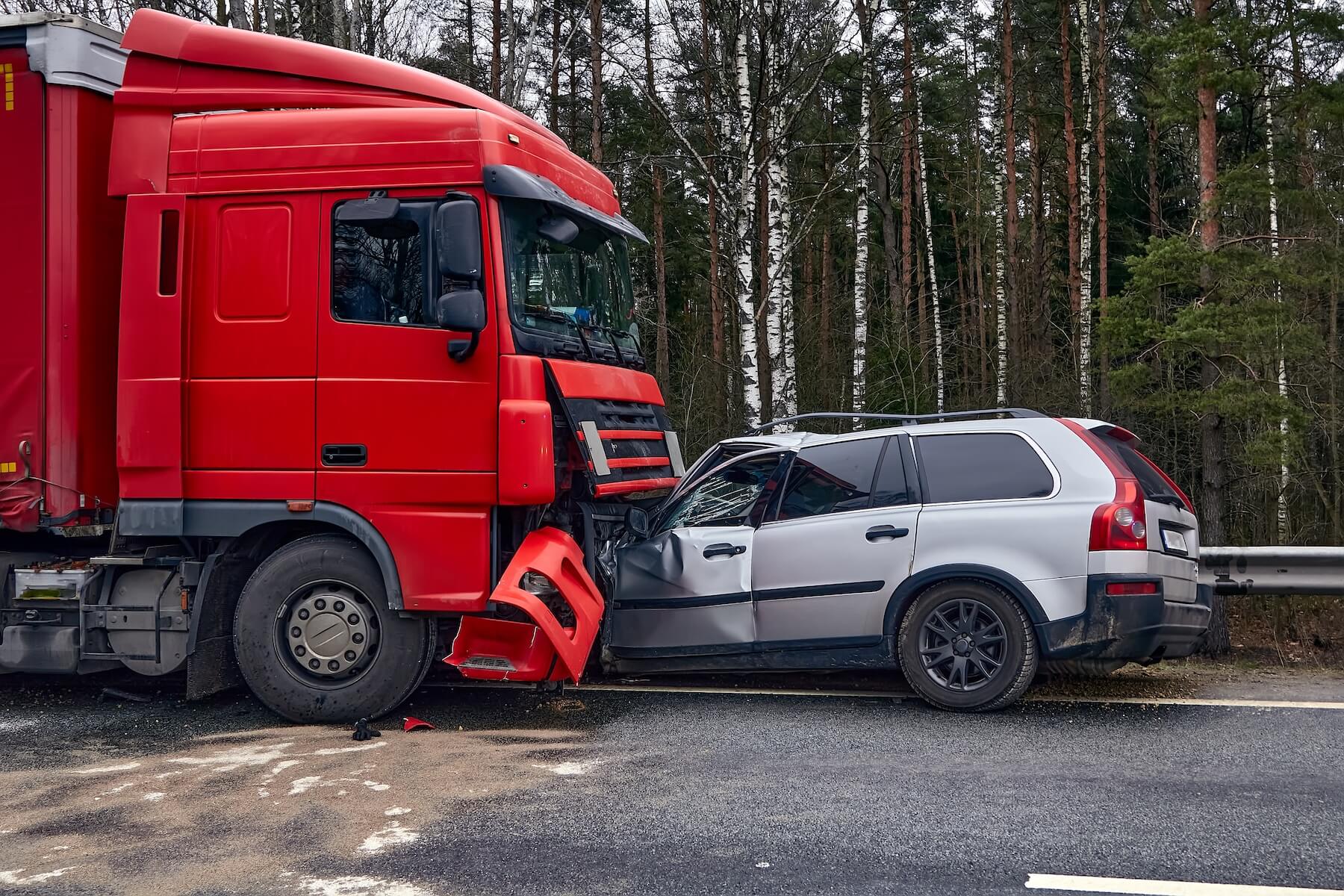
When Is a Trucking Company Liable for a Catastrophic or Fatal Truck Accident?
A catastrophic truck accident can change a family’s life in seconds. A person may suffer a traumatic brain injury, spinal cord damage, amputation, severe burns, permanent disability, or injuries that ultimately prove fatal.
When that happens, the truck driver’s actions are only one part of the investigation.
Commercial trucking companies decide who gets hired, how drivers are trained, how vehicles are maintained, how loads are scheduled, and how safety problems are handled. When those decisions contribute to a crash, the trucking company may share responsibility for the injuries or death that follow.
When may a trucking company be liable?
A trucking company may be liable when its driver caused the accident while performing work for the company. The company may also be directly responsible when its own hiring, supervision, dispatch, maintenance, or safety decisions helped create the danger.
For example, an investigation may find that the company hired an unqualified driver, ignored a history of crashes or violations, encouraged an unsafe delivery schedule, failed to repair a known mechanical problem, or allowed a driver to continue working after serious warning signs appeared.
Other companies may also be responsible. Depending on how the shipment was arranged, the case may involve a freight broker or logistics company, shipper, cargo loading company, maintenance contractor, leasing company, or vehicle manufacturer.
What makes a truck accident catastrophic?
There isn’t one definition that applies to every legal issue. In practical terms, a catastrophic injury is one that causes lasting impairment and significantly changes a person’s ability to work, communicate, move, live independently, or care for themselves.
These cases may involve brain injuries, spinal cord injuries, paralysis, amputations, severe burns, organ damage, multiple fractures, permanent neurological damage, significant disfigurement, or the loss of vision or hearing.
The injured person may need ongoing medical treatment, rehabilitation, home modifications, assistive equipment, or personal care for the rest of their life. When the injuries are fatal, the person’s estate and surviving family members may have claims under Washington’s wrongful death and survival laws.
Liability for the truck driver’s actions
A trucking company may be responsible when its driver causes a crash while carrying out work for the company.
The underlying conduct might involve speeding, following too closely, distracted driving, fatigue, impairment, an unsafe lane change, or driving too fast for traffic and weather conditions. A driver may also fail to inspect the truck before beginning a trip or continue operating after discovering a mechanical problem.
A serious truck accident investigation should determine what the driver was doing, why the driver was doing it, and whether the company’s policies or instructions contributed to the decision.
Negligent hiring and retention
Motor carriers must evaluate whether drivers are qualified to operate commercial vehicles. Federal requirements address employment applications, driving records, safety history, medical certification, and the documents that must be kept in a driver qualification file.
A negligent hiring investigation may examine whether the company reviewed the driver’s commercial driving history, prior employment, crashes, violations, license status, medical qualifications, and training.
The investigation may also look at what happened after the driver was hired. A company that learns about repeated speeding, logging violations, failed inspections, preventable crashes, or safety complaints may need to retrain, supervise, suspend, or remove that driver.
The issue isn’t whether the driver’s history was perfect. The question is whether the company acted reasonably when it hired the driver and whether it responded appropriately when new safety concerns arose.
Inadequate training and supervision
Having a commercial driver’s license doesn’t necessarily mean a driver was prepared for every truck, route, cargo type, or driving condition.
A driver may need additional instruction before operating a tanker, logging truck, dump truck, hazardous materials vehicle, oversized vehicle, or unfamiliar tractor trailer. Training may also be important when the driver will regularly travel through mountain passes, heavy urban traffic, construction zones, or severe weather.
Supervision matters too. Trucking companies may receive information from telematics systems, electronic logs, inspection reports, customer complaints, dispatchers, and other drivers. Those records can reveal speeding, hard braking, hours of service problems, unsafe driving patterns, or repeated mechanical concerns.
When a company has information showing that a driver may be unsafe, it can’t simply ignore the problem.
Driver fatigue and unsafe delivery schedules
Driver fatigue may result from more than a driver choosing to stay on the road too long. Dispatchers, managers, brokers, or shippers may create pressure through unrealistic pickup and delivery times.
Federal hours of service regulations limit the amount of time many commercial drivers may drive and remain on duty. They also include rest requirements and exceptions that depend on the type of operation.
A proper investigation shouldn’t rely on the driver’s electronic log alone. Attorneys may need to compare the log with GPS data, dispatch messages, fuel receipts, toll records, payroll information, pickup times, delivery records, bills of lading, and cellphone activity.
Those records may show that the official log doesn’t match what happened on the road. They may also show that a company knew the schedule couldn’t be completed safely.
Truck maintenance and inspection failures
Commercial trucks place enormous stress on their brakes, tires, steering systems, coupling equipment, lights, suspension, and trailer components.
Federal regulations require motor carriers to systematically inspect, repair, and maintain vehicles under their control. Safety related parts must remain in proper condition, and carriers must keep certain inspection and repair records.
A maintenance investigation may uncover worn brakes, damaged tires, unresolved steering problems, trailer defects, overdue inspections, repeated roadside violations, or repair requests that were postponed.
Mechanical failure isn’t always an unpredictable event. Maintenance files may show that a defect was reported days or weeks before the crash but wasn’t properly repaired.
Cargo loading and securement problems
Improperly loaded cargo can make a truck unstable, increase its stopping distance, cause a rollover, or allow material to fall into traffic.
Responsibility may depend on who loaded the trailer, secured the cargo, calculated the weight, inspected the shipment, and had the authority to correct the problem.
In some cases, the trucking company or driver handled the load. In others, the shipper, warehouse, loading contractor, or another company controlled that part of the process.
The bill of lading, load tender, weight tickets, cargo photographs, loading records, and communications between the parties may help establish what happened.
Who else may be responsible?
Determining who may be liable for a truck accident often requires examining several businesses with different responsibilities.
The driver may be responsible for unsafe operation. The motor carrier may be responsible for the driver’s actions and for its own hiring, training, dispatch, maintenance, or supervision failures.
A freight broker or logistics company may have selected the motor carrier. In the right case, the investigation may need to determine what safety information was available and whether the broker selected the carrier despite meaningful warning signs.
A shipper or cargo company may be responsible for an unsafe load. An outside maintenance provider may have performed incomplete repairs. A manufacturer may be responsible for a defective tire, brake component, steering part, or coupling system.
Identifying each company is especially important when the motor carrier has limited insurance or doesn’t have enough assets to address catastrophic harm.
Learn more about the common causes of truck accidents in Washington and the evidence that may help identify why a collision occurred.
How do Washington wrongful death claims work?
Washington law allows the deceased person’s personal representative to bring a wrongful death action when death was caused by another person’s wrongful act, neglect, or default. The claim is brought for the benefit of the beneficiaries identified by state law.
The rules governing who can file a wrongful death claim in Washington generally protect the deceased person’s spouse, state registered domestic partner, children, and stepchildren. When none of those beneficiaries exists, the deceased person’s parents or siblings may qualify.
A survival action serves a different purpose. It may preserve claims that belonged to the deceased person, including certain economic losses and, when the legal requirements are met, compensation for the person’s pain, suffering, anxiety, emotional distress, or humiliation before death.
Because wrongful death and survival claims address different losses, families should have an attorney evaluate which claims apply.
What compensation may be available?
The value of a catastrophic injury or wrongful death claim depends on the facts of the case.
In a fatal truck accident claim, recoverable losses may involve medical expenses, funeral costs, lost income, lost household services, loss of financial support, and the loss of companionship, care, guidance, and emotional support.
The calculation of wrongful death damages and settlement value depends on the family relationships, financial losses, available evidence, and circumstances of the death.
When the injured person survives, damages may include medical treatment, rehabilitation, future care, lost wages, reduced earning capacity, home modifications, assistive equipment, and the effect the injury has on the person’s independence and quality of life.
No article or online calculator can accurately estimate a claim without examining the injuries, family relationships, available evidence, insurance coverage, responsible parties, and applicable law.
What evidence may prove trucking company negligence?
The police report is only the beginning.
A trucking company liability investigation may require electronic control module data, driver logs, GPS records, dash camera footage, driver qualification files, training records, dispatch communications, maintenance histories, inspection reports, bills of lading, cargo records, company safety policies, cellphone records, and witness statements.
Public information may also help identify the motor carrier and its safety history. FMCSA’s SAFER Company Snapshot can provide company identification, operating information, inspection summaries, crash information, out of service data, and a safety rating when one exists.
This evidence should be preserved quickly. Digital records can be overwritten, and different companies may keep documents for different lengths of time.
What if the injured person was partly at fault?
Washington follows a comparative fault system. Fault assigned to the injured person may reduce the compensation awarded in proportion to that person’s share of responsibility, but it doesn’t automatically prevent recovery.
The trucking company or insurer may argue that another driver changed lanes, stopped suddenly, drove in a blind spot, or failed to react quickly enough.
Those arguments should be compared with vehicle data, physical evidence, video, witness statements, driver logs, and reconstruction findings.
How long do families have to act?
Washington law generally applies a three year limitations period to many personal injury and wrongful death claims, but Washington filing deadlines can vary depending on the claim, parties, and circumstances. The exact deadline may vary depending on the type of claim, the parties involved, government involvement, and other facts.
Families shouldn’t wait simply because the filing deadline may appear to be years away. Evidence can disappear long before the statute of limitations expires.
Talk With a Washington Truck Accident Attorney
A fatal or catastrophic truck accident requires more than a review of the collision report.
The investigation may need to examine the driver’s conduct, the trucking company’s hiring and safety practices, electronic data, maintenance records, cargo documents, insurance coverage, and the roles of other companies in the freight chain.
Defiance Injury Law’s Washington truck accident attorneys represent individuals and families after serious commercial truck accidents throughout the state.
Contact Defiance Injury Law to request a free case review if you’ve lost a loved one or suffered a life changing injury in a truck collision.
Frequently Asked Questions About Truck Accidents
Is a trucking company automatically liable for every crash caused by its driver?
No. Liability depends on the driver’s relationship with the company, whether the driver was performing work for the company, what caused the crash, and whether the company’s own conduct contributed to the accident.
Can a trucking company be liable for hiring an unsafe driver?
It may be. The investigation can examine whether the company properly reviewed the driver’s qualifications, employment history, driving record, medical status, safety history, and training.
Who files a truck accident wrongful death claim in Washington?
The deceased person’s personal representative generally brings the action for the benefit of the beneficiaries identified by Washington law.
Can several companies be responsible for the same truck accident?
Yes. Depending on the evidence, the driver, motor carrier, broker, shipper, cargo company, maintenance provider, leasing company, or manufacturer may share responsibility.
Does a federal safety violation automatically prove liability?
No. A violation may be important evidence, but the case still needs to connect the conduct to the accident and the resulting injuries or death.
How quickly should trucking evidence be preserved?
As soon as possible. Electronic records, video, tracking information, and dispatch data may be overwritten or lost even though the legal filing deadline hasn’t passed.
The information on this website is provided for general informational purposes only and may not reflect the most current legal developments in Washington State. It is not legal advice and does not create an attorney-client relationship. You should not act or refrain from acting based on any information on this site without seeking professional legal counsel. Every case is different, and outcomes depend on the specific facts and applicable law. Past results do not guarantee future outcomes.