What Happens If You’re Injured by a Government Vehicle in Washington?
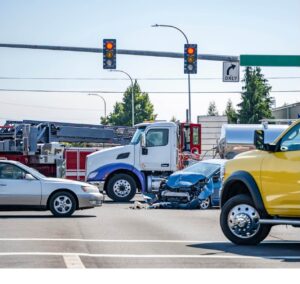
A crash with a government vehicle can feel confusing from the start. You may be dealing with injuries, medical bills, missed work, and insurance questions. Then you find out the other driver was working for a city, county, school district, transit agency, public utility, law enforcement agency, or the State of Washington.
That matters.
In Washington, injured people can bring claims against government entities in many situations, but these cases often involve extra steps that don’t apply in a typical car accident claim. Before you file a lawsuit, you may need to submit a formal tort claim to the correct government office and wait a required period of time. If the claim is against a local government entity, Washington law requires the claim to be presented to the appointed agent, and no lawsuit can be started until 60 calendar days have passed after the claim is presented.
That doesn’t mean you don’t have a case. It means the process needs to be handled carefully.
Government Vehicle Accidents Can Involve Many Types of Public Vehicles
When people think of a government vehicle accident, they often picture a police car or fire truck. Those cases do happen, but they’re only part of the picture.
Government vehicle injury claims may involve:
- City work trucks
- County maintenance vehicles
- Washington State Department of
- Transportation vehicles
Police cars or sheriff’s vehicles - Fire department vehicles
- Public transit buses
- School district vehicles
- Public utility vehicles
- Garbage, maintenance, or inspection vehicles
- Government-owned passenger cars used by public employees
The key question is usually whether the driver was acting within the scope of their government job at the time of the crash. If they were, the claim may need to be brought against the government entity rather than only against the individual driver.
Can You Sue the Government After a Vehicle Accident in Washington?
Yes, in many cases, you can pursue a claim against a government entity when a public employee causes an accident through negligence. Government entities and employees are not automatically immune from responsibility just because the vehicle was publicly owned.
The case still has to be proven. You generally need evidence showing that the government employee or agency acted negligently and that the negligence caused your injuries.
Common examples include:
- A city employee runs a red light while driving a work truck
- A transit driver fails to check for pedestrians before turning
- A police vehicle causes a crash while not using reasonable care
- A public utility truck backs into another vehicle
- A state employee rear-ends a driver while on duty
- A poorly maintained government vehicle causes or contributes to a collision
Government vehicle cases can become more complex when the agency argues that the employee was responding to an emergency, following policy, or not responsible for the crash. That’s why evidence matters early.
The First Step Is Identifying the Correct Government Entity
One of the most important parts of a government vehicle case is figuring out who legally owns, operates, or controls the vehicle.
That may sound simple, but it isn’t always obvious. A vehicle may display a city logo, be operated by a contractor, be leased by an agency, or be used by an employee from a specific department. Some crashes also involve more than one responsible party, such as a public agency and a private maintenance contractor.
Possible responsible entities may include:
- A city, such as Seattle, Tacoma, Bellevue, Spokane, or Yakima
- A county, such as King County, Pierce County, Snohomish County, or Kitsap County
- The State of Washington
- A public transportation agency
- A school district
- A port district
- A public hospital district
- A public utility district
- A government contractor or private company
This step matters because the tort claim must be sent to the right place. For local government claims, each local government entity must appoint an agent to receive claims, and the claim must be presented to that agent within the applicable time period.
Washington Government Claims Have Special Notice Rules
In a normal car accident case, you may be able to deal directly with insurance and file a lawsuit if the claim doesn’t resolve. When a government entity is involved, Washington law adds a pre-lawsuit claim process.
For local government entities, such as cities and counties, Washington law requires a claim for damages to be presented before a lawsuit is filed. The statute also requires use of a standard tort claim form or an allowed local government form, and the form must include information about the claimant, the incident, the injuries, the people involved, the time and place of the injury, and the amount of damages claimed.
For claims against the State of Washington, claims must be presented to the Office of Risk Management using the standard tort claim form. The state claim form must include similar information, including the claimant’s contact information, a description of what happened, a description of the injury or damage, the time and place of the incident, the people involved, and the amount of damages claimed.
This is one of the biggest traps in government vehicle cases. Sending a letter to the wrong department, relying only on an insurance adjuster, or assuming a phone call is enough can create problems later.
You Usually Have to Wait 60 Days Before Filing a Lawsuit
After the tort claim is properly presented, Washington generally requires a 60-day waiting period before a lawsuit can be filed.
For local government claims, no lawsuit can be started until 60 calendar days have passed after the claim is presented to the proper agent. Washington law also tolls, or pauses, the applicable limitation period during that 60-day waiting period.
For claims against the State of Washington, a similar 60-day waiting period applies after the claim is presented to the Office of Risk Management.
This waiting period gives the government entity time to investigate the claim before litigation begins. It does not mean you should wait to talk to an attorney. In many serious injury cases, the strongest work starts right away, including preserving vehicle data, photos, video, witness information, dispatch records, maintenance records, and agency policies.
How Long Do You Have to File a Government Vehicle Injury Claim?
Many Washington personal injury claims are subject to a three-year statute of limitations. RCW 4.16.080 provides a three-year deadline for actions involving injury to a person or rights of another.
Government vehicle cases can be more complicated because the tort claim process must happen before a lawsuit is filed. The three-year deadline may still matter, but you also need enough time to correctly present the government claim and wait the required 60 days before filing suit.
In plain English: don’t treat the three-year deadline like a reason to wait.
Government cases should be reviewed early because mistakes with the claim form, the correct agency, the correct recipient, or the timing can put an otherwise valid claim at risk.
What If the Government Driver Says You Were Partly at Fault?
Washington follows comparative fault. That means your compensation can be reduced by your percentage of fault, but being partly at fault does not automatically stop you from recovering damages. Under RCW 4.22.005, contributory fault reduces damages proportionately but does not bar recovery.
For example, if a government driver was speeding through an intersection but the injured driver was also slightly over the speed limit, the government may argue shared fault. The issue becomes how much fault belongs to each party.
In these cases, evidence can make a major difference. Helpful evidence may include:
- Traffic camera footage
- Dash camera footage
- 911 and dispatch records
- Vehicle GPS data
- Black box or event data
- Witness statements
- Crash scene photos
- Police reports
- Agency driving policies
- Maintenance and inspection records
- Cell phone records when distraction is suspected
Insurance adjusters and government claims representatives may look for reasons to reduce responsibility. A well-documented claim helps prevent the injured person from being unfairly blamed.
What Compensation May Be Available After a Government Vehicle Crash?
The damages in a government vehicle accident depend on the severity of the injuries, the available evidence, the long-term impact, and the facts of the crash.
Compensation may include medical bills, future medical care, lost income, reduced earning capacity, pain and suffering, disability, emotional distress, loss of enjoyment of life, property damage, and out-of-pocket expenses.
In catastrophic injury cases, the claim may also involve long term care needs, home modifications, mobility equipment, vocational loss, and the effect the injury has on the person’s independence.
If a government vehicle crash causes a death, the family may have a wrongful death claim. These cases require careful attention to who may bring the claim, which family members may benefit, and how the loss has affected the surviving family.
Why Government Vehicle Claims Are Often Harder Than Regular Car Accident Claims
Government vehicle injury cases can look like ordinary car accident cases at first. But behind the scenes, they often involve more procedure, more paperwork, and more defenses.
A few issues can make these cases harder:
- The correct government entity must be identified
- The correct tort claim form must be used
- The claim must be presented to the right office or agent
- The 60-day waiting period must be observed
- Agency records may need to be requested quickly
- Emergency response defenses may be raised
- Multiple public and private parties may share fault
- The government may argue the employee was not negligent
- The government may argue the injured person caused or contributed to the crash
This doesn’t mean the case can’t be won. It means the claim needs to be built carefully from the beginning.
What to Do After a Crash With a Government Vehicle
After any serious crash, your health comes first. Get medical care right away, even if you think the injury might improve on its own. Some injuries, including brain injuries, spinal injuries, internal injuries, and soft tissue injuries, can worsen after the initial shock wears off.
As soon as you’re able, try to preserve the basic facts. Write down the agency name on the vehicle, the vehicle number, the license plate, the driver’s name, the location, the time, and the names of witnesses. Take photos of the vehicles, the road, traffic signals, weather conditions, skid marks, debris, and visible injuries.
Avoid giving recorded statements before you understand your rights. Be polite and cooperative at the scene, but don’t guess about fault or minimize your injuries. Statements like “I’m fine” or “I didn’t see them” can later be used against you, even when the full facts are more complicated.
Then contact a Washington personal injury attorney who understands government claims. In these cases, timing and procedure matter.
How an Attorney Can Help With a Washington Government Vehicle Claim
A lawyer’s role is not just to submit paperwork. In a serious government vehicle injury case, an attorney can help identify the responsible agency, preserve evidence, file the correct tort claim, calculate damages, deal with government representatives, investigate agency policies, work with experts, negotiate settlement, and file a lawsuit if the claim cannot be resolved fairly.
This is especially important when the injury is severe, the crash involved an emergency response vehicle, the government denies fault, or the injured person is being blamed for the collision.
A trial-focused law firm can also prepare the case from the beginning as though it may need to be presented to a jury. That approach can improve leverage during negotiations because the government and its insurers know the case is being taken seriously.
Talk to a Washington Personal Injury Attorney After a Government Vehicle Accident
A crash with a government vehicle can leave you with more questions than answers. You may not know who is responsible, which office handles the claim, whether the driver was on duty, or how long you have to act.
You don’t have to sort that out alone.
Our Washington personal injury attorneys help people and families after serious crashes involving public agencies, commercial vehicles, and negligent drivers. We can review what happened, explain the next steps, and help protect your claim before important evidence disappears.
Schedule a free, confidential case review. There are no upfront attorney fees, and you pay no attorney fee unless we recover compensation for you.
Talk to a Washington Personal Injury Attorney After a Government Vehicle Accident
A crash with a government vehicle can leave you with more questions than answers. You may not know who is responsible, which office handles the claim, whether the driver was on duty, or how long you have to act.
You don’t have to sort that out alone.
Our Washington personal injury attorneys help people and families after serious crashes involving public agencies, commercial vehicles, and negligent drivers. We can review what happened, explain the next steps, and help protect your claim before important evidence disappears.
Schedule a free, confidential case review. There are no upfront attorney fees, and you pay no attorney fee unless we recover compensation for you.
FAQ: Washington Government Vehicle Accident Claims
Can I sue if I was hit by a city vehicle in Washington?
Yes, you may be able to bring a claim if a city employee caused the crash while acting within the scope of their job. However, claims against local government entities have special pre-lawsuit requirements. In Washington, local government claims generally must be presented to the entity’s appointed agent, and a lawsuit cannot be filed until 60 calendar days have passed after the claim is presented.
What if I was hit by a Washington State vehicle?
If the vehicle was operated by a State of Washington employee, the claim may need to be presented to the Office of Risk Management using the standard tort claim form. Washington law requires claims against the state for tortious conduct to be presented to that office before a lawsuit is filed.
Is the deadline different for government vehicle accident claims?
The general statute of limitations for many Washington personal injury claims is three years, but government claims also involve required pre-lawsuit steps. You may need to file a tort claim and wait 60 days before filing a lawsuit. Because those steps take time, it’s important to get legal guidance early.
Do I have to file a tort claim before suing the government?
Usually, yes. If your claim is against a Washington local government entity or the State of Washington, you generally must present a tort claim before filing a lawsuit. The exact form and recipient depend on whether the claim is against the state, a city, a county, or another public entity.
What happens during the 60-day waiting period?
The government entity has time to investigate the claim. You generally cannot file the lawsuit until that period expires. For both local government claims and state claims, Washington law provides a 60-day waiting period before suit can be filed.
Can I still recover compensation if I was partly at fault?
Yes. Washington’s comparative fault law allows compensation to be reduced by your percentage of fault, but partial fault does not automatically prevent recovery.
What evidence helps prove a government driver caused the crash?
Helpful evidence may include photos, witness statements, police reports, traffic cameras, dash cameras, GPS records, vehicle maintenance records, dispatch logs, agency policies, and medical records. In serious cases, an attorney may also work with accident reconstruction experts or medical experts to prove fault and damages.
Are police cars, fire trucks, and emergency vehicles treated differently?
They can be. Emergency response cases may involve additional factual and legal issues, including whether lights or sirens were used, whether the driver followed policy, whether the response was reasonable, and whether the public employee still had a duty to use appropriate care under the circumstances. These cases should be reviewed carefully.
What if the government denies responsibility?
A denial does not end the case. Government entities and insurers often dispute liability, causation, or damages. An attorney can investigate the crash, gather evidence, consult experts when needed, and determine whether a lawsuit should be filed after the required claim process is complete.
How much does it cost to hire a personal injury attorney?
Most personal injury attorneys handle these cases on a contingency fee basis. That means there are no upfront attorney fees. You only pay an attorney fee if there is a recovery. This allows injured people and families to get legal help without taking on additional financial pressure at the beginning of the case.
The information on this website is provided for general informational purposes only and may not reflect the most current legal developments in Washington State. It is not legal advice and does not create an attorney-client relationship. You should not act or refrain from acting based on any information on this site without seeking professional legal counsel. Every case is different, and outcomes depend on the specific facts and applicable law. Past results do not guarantee future outcomes.